In the high-stakes arena of today's serious sliding, success is far more than exclusively a result of brute torque or driver aggression. Instead, it is now a complex discipline which requires a scrupulous fusion of choosing a proven chassis, outfitting it with the highest-quality competition parts, and, most importantly, understanding its dynamic performance on the track through advanced drift telemetry software. This definitive manual acts as your roadmap starting from the initial idea of a drift build through to the last engineering-refined refinements that elevate a strong vehicle into a predictable winner. We will examine in detail the precise engineering of chassis dynamics adjustment, demonstrating how a state-of-the-art suspension tuning tool like a dedicated telemetry system eliminates guesswork and delivers exceptional insight into your car's actual dynamics.
The bedrock of any successful drift machine is, without question, the base vehicle itself. Several cars have attained legendary status within the international sliding community due to their inherent weight distribution, durable design, and the enormous ecosystem of aftermarket components available. Choosing the optimal starting point is the primary and most crucial selection a driver will make. As an example, the BMW's E36 3 Series is universally acknowledged as perhaps the the greatest balanced cars for drifting of history. Its near-perfect balanced front-to-rear weight, combined with a driven rear axle setup and extremely reliable straight-six powerplants, forms a chassis that is both forgiving for newcomers and highly effective in the hands of a expert driver. The successor of this concept, the BMW E46 platform, improves on these attributes with a increasingly developed structure, increased stance for improved stability, and yet more lock straight from the manufacturer. A distinct dominant platform in the top-level arena is the Corvette C6.
This American performance car brings a particular set of advantages to the sideways discipline, featuring a light aluminium frame, a transaxle-style transaxle that helps create an ideal front-to-rear mass ratio, and the colossal torque of a powerful LS-series V8 engine. This fusion renders it an absolute force on track, designed of starting and maintaining long slides with seemingly minimal deployment of throttle. For drivers desiring remarkable performance per dollar, the Nissan 350Z rises above as a prime candidate. It is delivered from the factory with a robust chassis, a decent factory locking differential, and the free-revving V6 motor that provides plenty of horsepower and torque for mastering and advancing in the sport. Its successor, the Nissan 370Z, presents additional advancements in body strength, handling precision, and outright engine performance, cementing its status as a favorite pick among professional pilots. Additional legendary platforms that merit attention include the nimble unique Mazda FC, the most popular S13 Silvia/240SX, the torque-rich Ford SN95, the more recent BMW E90, and the compact yet incredibly engaging and forgiving Mazda MX-5. Each of these platforms provides a unique array of characteristics, challenges, and possibilities, but they all share the core elements required to be transformed into a capable drift car.
However, choosing the right platform is merely the starting point. To unlock the full performance of any of these machines, substantial modifications to the steering system and suspension systems are absolutely non-negotiable. This is where the domain of precision drift-spec hardware comes into sharp importance. The one most transformative upgrade for a serious drift car is the installation of a maximum-angle drift angle kit. These advanced kits, such as those engineered by performance brands like specialist manufacturers, are designed to significantly expand the car's available turning lock. A OEM production vehicle is severely constrained in how far its steering tires can pivot, a engineering compromise for daily use. In sliding, but, maximum countersteering is frequently needed to control and maintain a angle. An steering kit replaces the stock uprights, tie rods, and potentially suspension arms with components that permit the front tires to reach degrees of turn beyond 70 or even 80 degrees, as opposed to a average factory angle of around 40 to 50 degrees.
This tremendously expanded steering angle gives the driver with significantly more authority during a slide, enabling it to be much easier to start a slide, maintain it through a long turn, and transition seamlessly from one side to the other. The improvement in controllability is truly transformative. Combined with a correctly chosen steering kit is the equally vital modification to the chassis's damping system. Generic or even high-end sport coilovers are generally not intended for the unique and harsh needs of drifting. A purpose-built set of adjustable dampers is of utmost importance. These specialized suspension components incorporate specific damping rates and spring rates that are tuned for the extreme weight transfer that is inherent of aggressive driving. When a pilot starts a angle, the vehicle's weight is shifted rapidly to the front of the turn. Optimal drift-spec dampers control this transfer in a predictable manner, enabling the car to find its balance quickly and providing the operator precise feel through the steering wheel and driver's seat. They also allow for precise tuning of stance, shock absorber firmness, and cross-weight, which are all fundamental aspects of dialing in the chassis's handling to a particular venue or driving technique. As a system, a precision-engineered angle modification system and a expertly specified set of performance adjustable dampers form the core hardware foundation upon which all later refinement is based.
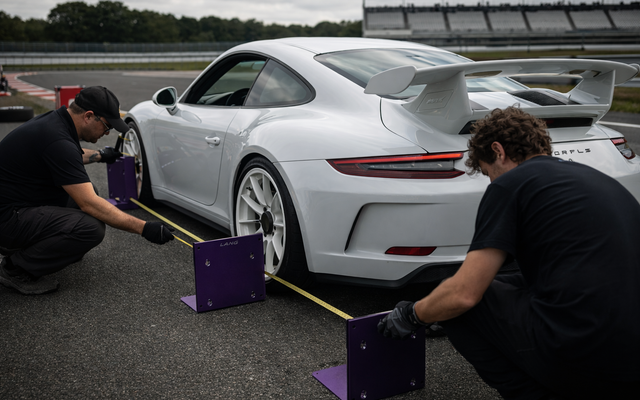
Once the essential components is fitted, the following vital stage in the project is the detailed setting of the vehicle's suspension geometry. This is the realm of chassis dynamics adjustment, a procedure that can appear daunting to the uninitiated but is, in reality, the secret to turning a collection of fast components into a harmonious and controllable vehicle. The most debated parameter of tuning for oversteer is certainly negative camber. Wheel camber is the angle of the tire compared to the upright axis when looked at from the forward of the chassis. When the top edge of the wheel is angled inward, this is referred to as camber-in. For sliding, an inward tilt on the steering wheels is universally employed and is considered essential. The logic is deeply related to physics.
When a vehicle is cornering at high slip angles, the body leans towards the outside of the corner. This body roll causes the outer steering tire to lose its best grip area with the tarmac. By applying negative camber, the wheel is pre-leaned to counteract this tilt. As the car tilts into the bend, the tire flattens out with the track, optimizing its traction at the critical moment when it is most required for control. Commonly, front axle adjustments for a serious drift car fall between approximately -3 degrees to as much as -5 degrees or even beyond, depending on the parameters of the car setup, rubber type, and driver feel. The rear wheels also employ negative camber, but the values are generally more modest and less aggressive than the front. Overly aggressive negative camber at the rear can result in the chassis excessively prone to oversteer and difficult to manage on acceleration application, as it diminishes the usable contact patch of the powered tires during straight-line power delivery. Hence, rear axle camber settings are frequently in the vicinity of -1 degree to -3 degrees, striking a precise equilibrium between providing sufficient lateral traction to help in starting and sustaining the angle while still maintaining good hook-up for exiting the corner. camber angle is only one component of the more complex alignment picture, which additionally encompasses toe setting, caster, and bump steer adjustment.
Toe angle describes the orientation of the tires when drift tuning app looked at from above. Toe-in means the front edges of the wheels are closer together than the trailing edges, while negative toe means the converse. For oversteer, a small amount of front toe-out is often used to sharpen the turn-in handling reaction, making the vehicle feel more nimble and willing to start a drift. Rear toe setting is usually set to zero or a extremely small amount of inward toe to encourage stability under acceleration. Caster is the forward or rearward tilt of the steering axis when observed from the lateral of the chassis. More positive caster improves self-centering and stability solidity, and it additionally boosts inward lean gain during cornering, which is extremely useful. Setting these settings is a intricate interaction where a change to one value can and often will impact the other settings. The traditional method for setting a chassis's suspension geometry for competition has historically been a time-consuming affair of guesswork and adjustment. A driver or engineering group would apply a adjustment based on experience, run the vehicle on track, rely on the driver's individual perception and comments, and then make an additional change. This cycle would iterate time after time until the vehicle felt "good" or the scheduled testing time ended. This approach is not just extremely inefficient in terms of man-hours and tires, fuel, and parts, but it is also deeply imprecise.
Pilot feel is a infamously subjective data source, affected by countless variables such as exhaustion, changing track surfaces, weather, and simply the mindset of the operator on that particular session. What feels "tail-happy" on one run might feel "pushing" on the following pass, resulting in contradictory feedback and ineffective tweaks. This age-old problem in chassis setup is specifically where modern engineering tools has made its mark to revolutionize the process.
The development and integration of sophisticated drift telemetry software has brought about a radically different age for tuning and optimizing high-performance sliding vehicles. These tools, showcased by innovative solutions like data acquisition tools, function by physically recording the real-time mechanical performance of the vehicle as it is operated on the course. Unlike depending on personal feedback, these tools collect quantifiable metrics on key variables such as damper compression and extension, wheel speed, G-force loading, wheel angle, and driver input drift telemetry software position. This acquired data stream is then analyzed by sophisticated software that can graph and decode the information in a comprehensible format. For the first time, engineers and builders can see precisely what the chassis is exhibiting at every moment of a lap. This capability changes the whole chassis setup process. Consider the particular goal of setting the front camber for a specific vehicle. As an alternative to making a adjustment from -3 degrees to -3.5 degrees and then testing many passes to try and "feel" a difference, a vehicle dynamics tool can give immediate and clear information. The software can display in a chart how the tire's grip is acting during the critical stages of a angle: initiation, sustain, and changing direction. It can reveal if the current angle is permitting the outside suspension engineering front tire to maintain maximum loading or if the rubber is overloaded on its external edge.
The system can subsequently suggest data-driven suggestions for modification. Perhaps the data shows that the tire is still stressing its sidewall at -3.5 degrees of camber, suggesting that even more inward lean, say -4 degrees, might be warranted. Conversely, the information might reveal that the tread is failing to reaching optimal operating temp or that the inner shoulder is degrading unevenly, which could point to that there is overly aggressive inward lean and a small decrease back to -3.2 degrees would be better efficient. This standard of accuracy and actionable analysis was literally impossible in the days of exclusively seat-of-the-pants setup.
The impact of utilizing a advanced drift telemetry system reaches well beyond just optimizing alignment. It serves as an invaluable suspension tuning guide that is tailored to your exact chassis. When setting the damping settings on your coilovers, rather than depending on general advice or copying another team's setup, you can utilize the telemetry to observe how the vehicle is reacting in reaction to your adjustments. The software can show the suspension travel data over a lap, showing if the shocks are handling the body movement optimally or if they are permitting the vehicle to become unsettled excessively after a direction change. It can help in identifying challenges like hitting the bump stops or excessive extension, enabling you to apply data-backed decisions to preload settings, rebound/compression rates, or ride height. This methodology extends equally to the intricate art of car alignment tuning. In addition to camber angle, the system can give data into how modifications to toe and caster are impacting the chassis's handling during different phases of a slide. For instance, it can allow you to determine the optimal amount of front toe out for your individual steering setup and driving technique by analyzing the response time of turn-in response and the stability of the car at lock steering angle. This transforms the software an extremely effective drift suspension tuning guide that is actively calibrated by the actual behavior of your personal chassis on the track. It shifts the entire process from a mysterious craft into a repeatable engineering process.
Moreover, the value of a system like data acquisition is not at all restricted to expert tuners with large resources. For the amateur enthusiast, it serves as an amazing equalizer. It practically offers the tuner with the analysis of a full-time race engineer without the typical overhead. It speeds up the development time by delivering clear solutions to challenges that would traditionally take countless track days of experimentation to solve. A builder can understand how their individual car reacts to different inputs, gaining a deeper understanding of vehicle dynamics in the endeavor. It additionally democratizes professional chassis dynamics concepts, allowing anyone with the drive to refine their machine to do so in a systematic and successful fashion. This is notably significant in a discipline like drifting, where setup expertise has traditionally been a closely guarded asset among professional drivers. Now, that capability can be in the hands of every serious driver.
In summary, the process to building and tuning the perfect competitive sliding vehicle is a comprehensive mission that perfectly blends proven engineering principles with cutting-edge telemetry solutions. It commences with the wise choice of a capable chassis, then enhanced by the installation of essential performance hardware like maximum-angle steering angle kits and properly specified performance adjustable dampers. The build then advances into the precision phase of chassis dynamics adjustment, where parameters like negative camber, toe setting, and caster angle are precisely set to complement the vehicle's modified hardware and the driver's individual needs. Finally, and what genuinely differentiates the modern methodology from the traditional methods, is the integration of a advanced suspension tuning application. This tool removes the uncertainty and trial and error of purely feel-based setup by giving objective, real-time telemetry on how the vehicle is truly behaving. It functions as an indispensable suspension tuning tool, a definitive drift suspension tuning guide, and a comprehensive chassis development system. Together, this integrated philosophy leads to that every element of the competition vehicle—from the selection of the chassis to the last tweak on the suspension—is optimized for peak competitiveness on the competition venue. It represents the full maturation of the discipline of oversteer driving, connecting raw car control with surgical vehicle setup to forge the perfect effective machines imaginable.